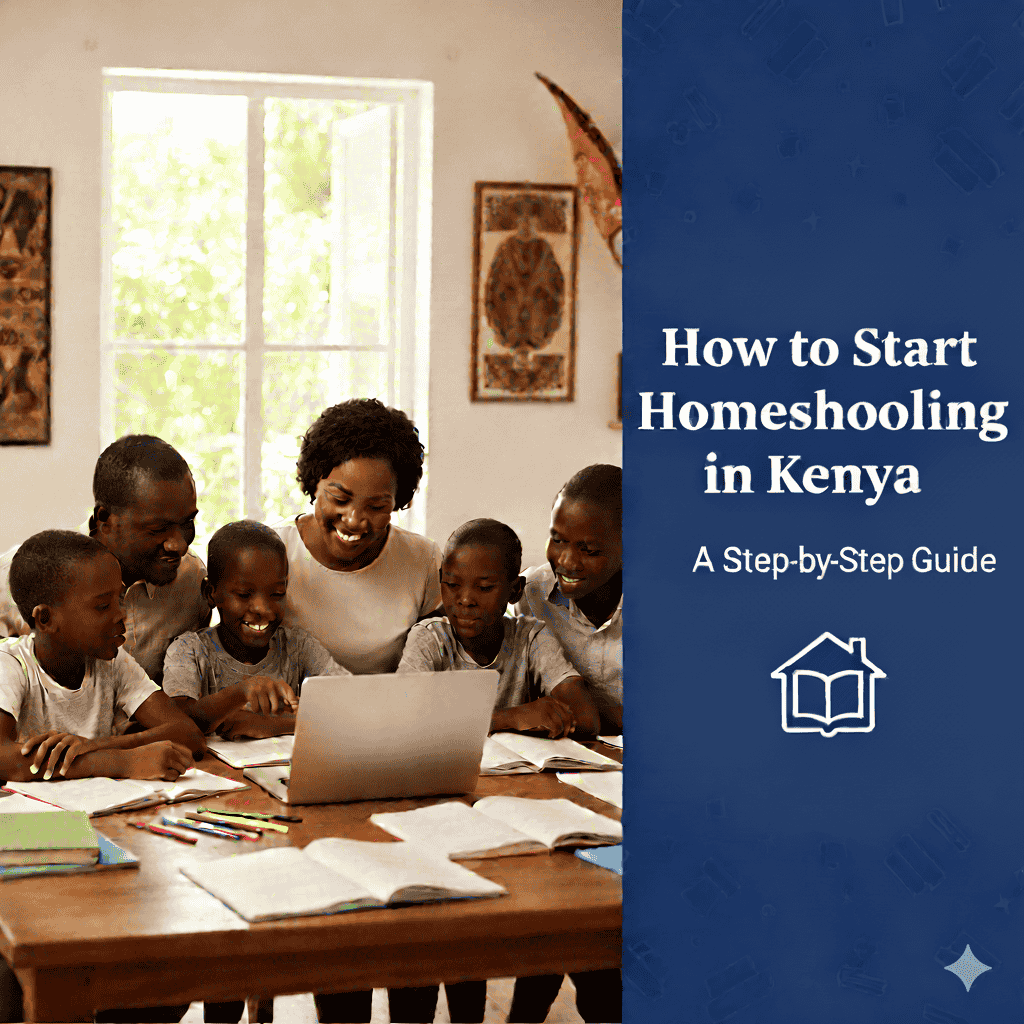
Homeschooling in Kenya is growing steadily as more parents look for flexible, personalized education for their children. Whether it’s due to concerns about the CBC system, faith-based reasons, or a desire for international qualifications, homeschooling is a real and viable option.
The good news is that homeschooling is legal in Kenya. Many families are already doing it successfully, and you can too.
In this guide, we’ll walk you through the exact steps to start Homeschooling in Kenya — from understanding the law to choosing the right curriculum and setting up your homeschool space.
Step 1: Understand the Legal Landscape
Homeschooling in Kenya is not yet fully mainstream, but it is being practiced by many families, especially in urban areas.
While the Ministry of Education does not officially promote homeschooling, there are no clear laws banning it either. Most homeschooling families operate independently, choosing international exam paths like IGCSE, GED, or SAT instead of registering with KNEC (Kenya National Examinations Council).
Key point: KNEC/CBC (Competency-Based Curriculum) is not designed for homeschooling, and there’s no structured path for private homeschoolers under CBC. Therefore, families that are homeschooling often choose international exams such as IGCSE, GET, and SAT rather than KNEC/CBC exams.
Tip: To stay informed about any legal updates, resources, or upcoming events related to homeschooling, it is advisable to join homeschooling support groups on social media platforms such as WhatsApp, Facebook, and Telegram.
Step 2: Define Your Why and Goals
Every family starts homeschooling for different reasons. Some of these reasons include the need for:
- A more flexible schedule
- Better quality education
- Faith-based learning
- Special needs or unique learning styles
- Safety or health concerns
Before homeschooling your children, take time to clarify your goals. This will help you make better decisions about curriculum, teaching style, and daily routines.
Write down what matters most to you:
- Do you want your child to do international exams (like IGCSE, GED, or SAT)?
- Are you more focused on life skills and hands-on learning?
- Do you want a balanced mix of academics and personal growth?
Having a clear “why” will keep you focused, especially on hard days.
Step 3: Choose a Curriculum or Approach
After identifying your goal for homeschooling, the next thing to choose is how you’ll teach. There are a couple of different homeschooling curriculum options in Kenya to choose from.
Popular Homeschooling Options in Kenya:
- International Curricula:
- Cambridge (IGCSE) – widely recognized and flexible.
- ACE (Accelerated Christian Education) – faith-based and structured.
- Abeka – Christian curriculum, used mostly by U.S.-based online schools.
- Montessori – child-led, especially for younger learners.
- Online Schools – platforms like Khan Academy, Time4Learning, etc.
- Hybrid Options:
- Using CBC books at home, but adapting the pace and approach.
- Combining local and international resources.
Pros and Cons:
| Approach | Pros | Cons |
| International | Globally recognized, flexible | Costly exam fees |
| ACE/Abeka | Faith-based, structured | Less widely recognized |
| Montessori | Great for early years, child-led | Not exam-focused |
| Hybrid (CBC + mix) | Affordable, local content | No official homeschooling support under the CBC |
Action Point: Shortlist 2–3 options that align with your goals. Research them thoroughly and go through curriculum samples, reviews, costs, and exam pathways.
Step 4: Plan Your Homeschool Setup
To do homeschooling, you don’t need to build a mini school at home. However, a bit of planning makes a big difference.
Decide Where Learning Will Happen:
For this, you have several options, which include:
- A dedicated homeschool room (if space allows)
- Shared spaces like the dining table or the living room
- A mix of dedicated and shared spaces for flexibility
Basic Supplies:
You’ll also need some basic supplies to support learning. Some of these include:
- Textbooks and notebooks
- Stationery and art materials
- Internet access
- Laptop or tablet for research, classes, or online curriculum
Create a Child-friendly Learning Environment:
To support learning, it is important that you create a child-friendly learning environment. To do this:
- Keep the space tidy, well-lit, and inviting.
- Store materials in labeled boxes or shelves.
- Involve your child in setting up their learning space.
Sample Timetable:
Primary Level (Ages 6–12):
| Time | Activity |
| 8:30 – 9:00 | Morning routine & setup |
| 9:00 – 10:30 | Core subjects (Math, English) |
| 10:30 – 11:00 | Break / Outdoor play |
| 11:00 – 12:30 | Science / Reading / Art |
| 1:00 onwards | Lunch, chores, free play, extracurriculars |
High School (Ages 13+):
| Time | Activity |
|---|---|
| 8:30 – 10:30 | Math / English / Science |
| 10:30 – 11:00 | Break |
| 11:00 – 1:00 | Electives / Exam prep / Projects |
| Afternoon | Independent study / Online classes |
Step 5: Register with a Homeschool Group / Support Network
Homeschooling can feel lonely at first, but it doesn’t have to be. Joining a homeschool group or a support network can make a big difference.
Why It Matters:
- Community – share ideas, experiences, and encouragement.
- Accountability – stay on track with your goals.
- Resources – access to books, co-op classes, tutors, and curriculum tips.
- Socialization – your child meets other homeschoolers for group activities, field trips, and friendships.
Where to Find Groups:
- Nairobi & Mombasa have several active homeschooling communities.
- WhatsApp & Facebook groups connect families all across Kenya.
- Look out for local co-ops offering art, science, PE, or field days.
The advantage of joining such groups and networks is the added benefit of helping your children get social interactions.
Step 6: Decide on Assessments & Exams
As your homeschool journey progresses, you’ll want to plan for exams and assessments, especially if your child will pursue university or college.
Common Exam Options for Homeschoolers in Kenya:
- IGCSE (Cambridge or Pearson Edexcel)
- Taken at registered exam centers.
- Widely accepted in Kenya, the UK, and globally.
- GED
- U.S. high school equivalency test.
- Accepted by many U.S. and some Kenyan universities.
- SAT
- U.S. college entrance exam.
- Useful if applying for universities abroad, especially with scholarships.
Most homeschoolers in Kenya choose IGCSE or GED + SAT, depending on their goals.
Registration: You’ll need to sign up through private exam centers like the British Council, international schools, or authorized GED/SAT centers in Nairobi and other cities.
Note: CBC/KNEC exams are not common among homeschoolers, and there’s no current homeschooling framework under the CBC system.
Step 7: Start Small and Adjust
When you’re ready to begin, start simple.
Begin with:
- A basic daily routine (1–2 core subjects).
- A few resources (books, online videos, printables).
- Short lessons to build confidence.
Then:
- Add more subjects and structure over time.
- Explore your child’s interests through projects or activities.
- Be open to adjusting your approach as needed.
Homeschooling doesn’t need to copy traditional school. One of its biggest strengths is flexibility. You can tailor learning to your child’s pace, interests, and personality.
Remember, there’s no “perfect” start. It’s okay to make mistakes. The goal is progress, not perfection.
Common Challenges (and Solutions)
Homeschooling in Kenya comes with unique questions — here’s how to handle the most common ones:
Am I qualified to teach my child?
You don’t need to be an expert. Many parents learn alongside their kids, and there are endless resources, tutors, and online courses to help.
What about socialization?
Join homeschool groups, sign up for sports, church programs, or community activities. Kids thrive with mixed-age, real-life interactions.
Is homeschooling expensive?
It can be affordable. Use secondhand books, free printables, YouTube, and co-op sharing. Online tools like Khan Academy and free curriculum blogs are excellent starting points.
What Next After You Start Homeschooling in Kenya?
Homeschooling in Kenya is not only possible. It’s becoming a practical, rewarding choice for more families each year.
With the right mindset, resources, and support network, you can start Homeschooling in Kenya and create an education that fits your child’s unique needs and future goals.
Start with your “why,” take it step by step, and connect with others on the journey. You don’t have to figure it all out at once.
Ready to begin? Subscribe below to get your FREE Beginner’s Homeschooling Checklist, which is a practical guide to help you take the first steps with confidence.